
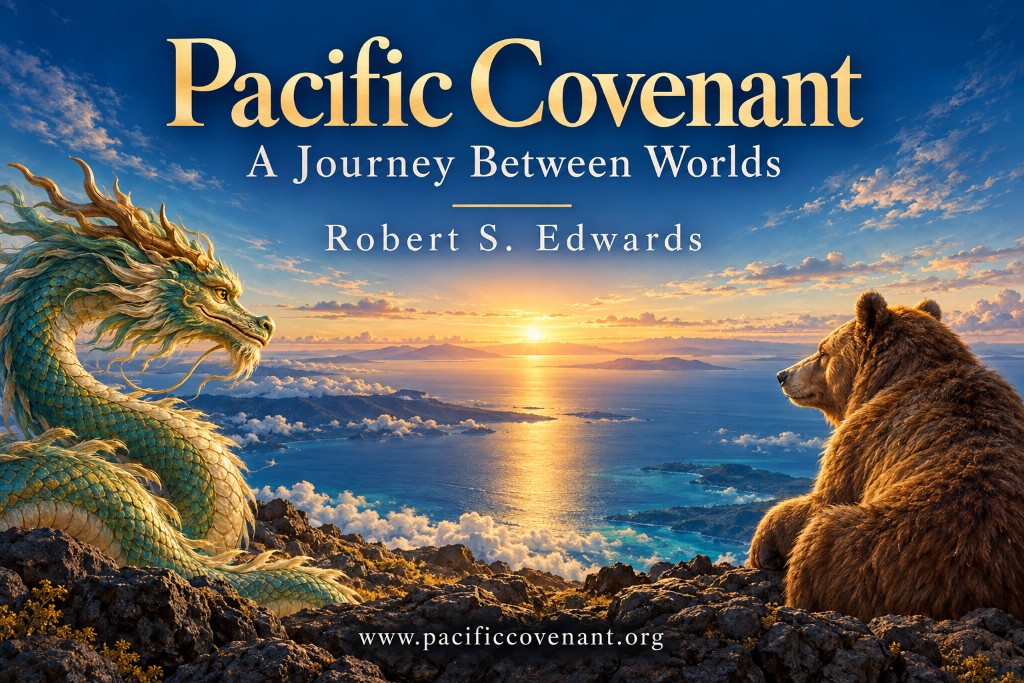
✥ A Pacific journal ✥
Listen in English · 10:03
普通话朗读 · Listen in Mandarin · 7:43
Pacific Covenant · A Journey Between Worlds
Robert S. Edwards
Every Child Inherits a Horizon
At first, it seems complete. It is bounded by family, familiar places, trusted voices, and the landscape we call home. We do not question its limits because we cannot yet imagine what lies beyond them.
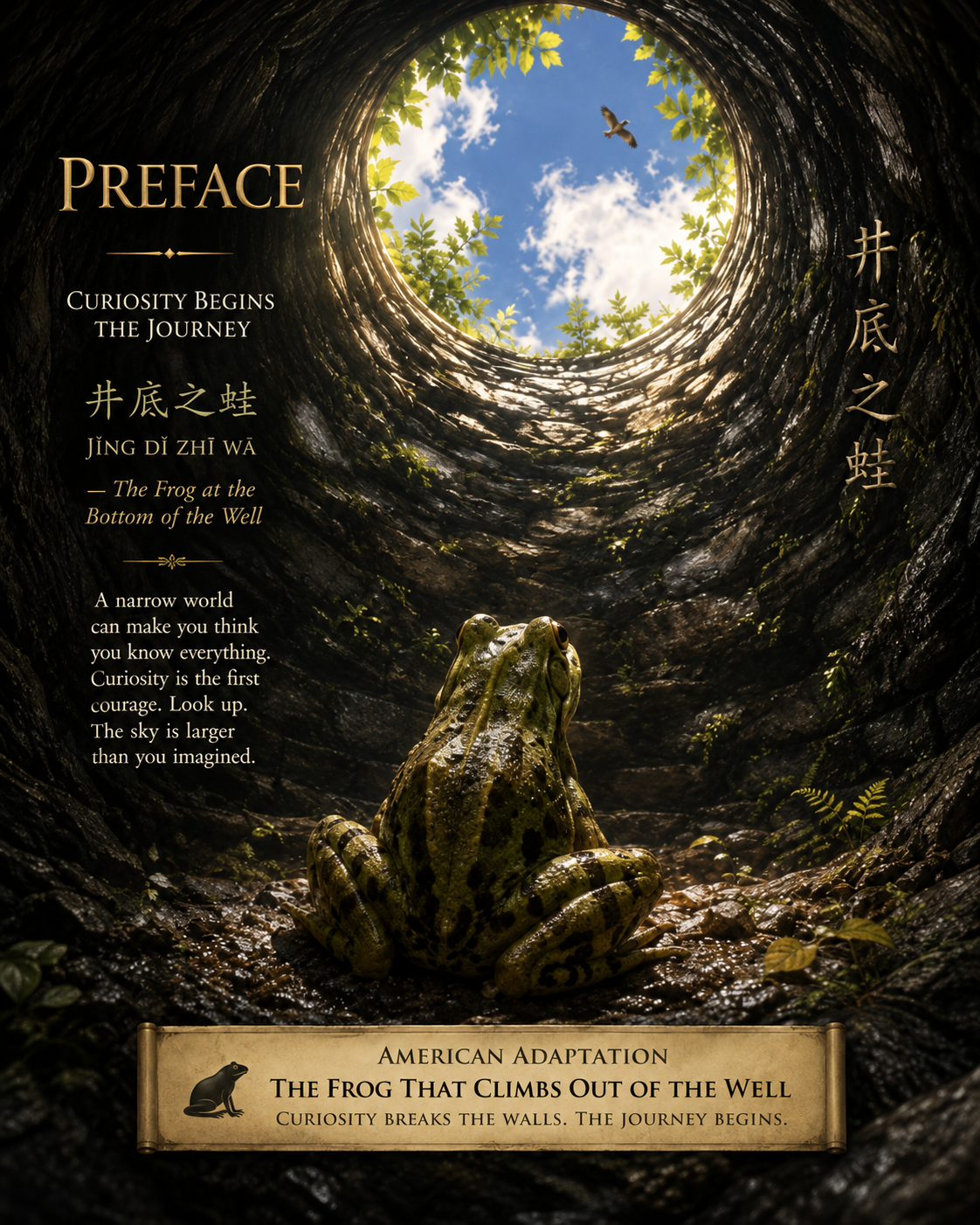
The Chinese tell the story of a frog who lives at the bottom of a well. Each day, he looks upward at the small circle of blue above him. Having seen no other sky, he naturally believes that little circle is the whole of heaven.
The frog is not foolish. He is simply limited by experience.
I recognize myself in him.
My journey began in the deserts of New Mexico, where I was born while my father served in the Air Force. My earliest memories formed beside Lake Mendota in Wisconsin. Our family later lived beside a quiet bayou in Ocean Springs, Mississippi, where I watched the water disappear toward the Gulf of Mexico and wondered where it went.
From there came Alabama, Tennessee, the Mississippi River, the Tennessee River, and eventually the Pacific Ocean.
Water always seemed to be leading somewhere.
So was I.
As a boy, I announced that I intended to become America’s ambassador to China. I do not remember whether the adults laughed. What mattered was that no one told me it was impossible. My parents allowed the dream to live, even when none of us could have imagined the form it would eventually take.
I never became an ambassador in the official sense. No president nominated me. No Senate confirmed me. Instead, I taught English in a Chinese city largely closed to foreigners. I played ping-pong with students on classroom desks and outdoor concrete tables—and lost more often than I care to admit. I traveled China’s commercial roads when telephones were unreliable, trains were slow, and relationships were essential.
I worked with teachers, students, factory managers, entrepreneurs, immigrants, and families. Through them, China ceased to be an abstraction. It became a collection of friendships, obligations, misunderstandings, and promises kept.
China was not the only place that formed me.
Memphis taught me the power of an improbable city. Clarence Saunders reimagined retail. Kemmons Wilson transformed hospitality. Fred Smith reinvented global logistics. Rhodes College gave me teachers who took my ambitions seriously before I had earned the confidence to take them seriously myself.
Memphis gave me a field to cultivate.
China required me to leave it.
The path between them did not unfold according to plan. Along the way, I lost jobs, misjudged institutions, spoke too quickly, and sometimes offered a grand plan when someone had requested a modest report. I often saw possibilities before learning the patience required to bring others with me. I mistook speed for progress and candor for strategy.
Yet the same restless spirit kept carrying me toward people and places that enlarged my life. Teachers, businesspeople, immigrants, students, and families from many parts of the world showed me forms of courage and loyalty I might otherwise never have recognized.
Then, at a Japanese restaurant in Chattanooga, a young woman from Chengdu brought mapo tofu to my table.
Her name was Zhan Chang, or Jan for short.
China had occupied my imagination for years. Through Jan, it entered my family. Our son Thomas was born belonging naturally to the two civilizations I had spent years trying to understand.
This book is the story of how that bridge was built.
It begins before me, among families shaped by military service, science, teaching, faith, railroads, civic life, and migration. It passes through Rhodes, Memphis, China, New York, Chattanooga, Wego, marriage, fatherhood, failure, and renewal. It culminates not in a claim that I possess the solution to the relationship between America and China, but in a conviction formed through living among people connected to both.
It is not the story of uninterrupted success. My unconventional career did not always provide the stability I hoped to give my family. Jan’s discipline and practical intelligence gave our household an essential steadiness. She became an accountant, organizer, fundraiser, delegation leader, and bridge-builder in her own right. Much of what I was free to imagine rested upon work she quietly performed.
Nor did I always understand the lesson while living through it. At the time, life often felt like a collection of accidents, dismissed proposals, unexpected telephone calls, missed opportunities, providential meetings, and ideas that appeared too large for the institutions receiving them.
Only later did I recognize the pattern.
The twelve chapters that follow are arranged around the animals of the Chinese zodiac. The animals illuminate enduring qualities of character. They helped me ask not only who I was becoming in each season, but what that season required of me.
They tell the story of a Southern boy whose horizon widened from local streams to great rivers, from Tennessee to China, and from fascination with another civilization to a deeper appreciation for both.
They also tell the story of the people who carried me while I was busy looking toward the horizon: parents, brothers, teachers, mentors, employers, students, friends, a wife, a son, and families on both sides of the Pacific.
My deepest conviction emerged from those relationships.
Trustworthy relationships across national and civilizational boundaries give peace something to stand on. Governments, treaties, markets, and defenses remain necessary. But their work becomes more durable when people can learn from one another, keep their word, endure misunderstanding, and remain in relationship when doing so is no longer easy or fashionable.
That is the conviction behind what I call the Edwards Thesis: the density and durability of trustworthy relationships across civilizational boundaries are part of the infrastructure of international order. Relational realism is the way I understand its practice. Power and interests are real; so are the relationships through which people interpret them and sometimes change what they are willing to do. A Pacific Covenant is my proposal for giving that practice a lasting public form.
The Name and the Voyage
Its Chinese name is 太平之约 — Tàipíng zhī yuē: a Covenant of Great Peace. Pacific names an ocean in English. Tàipíng names a condition of civilization. The distinction matters. This is not merely an agreement about a body of water. It is an invitation to imagine what might happen if great peoples chose a great peace.
The journey to that proposal runs through ports, trains, factories, classrooms, banquet rooms, mountain roads, friendships, reversals, and returns. I could not have begun with the Covenant. I had to live my way toward it.
The historical depth and commercial electricity of James Clavell’s Tai-Pan and Noble House helped draw me toward the China coast. I wanted to enter that world. What I found there would gradually change my idea of a successful voyage.
China became for me a living tapestry upon which an improbable American life could unfold. At times I seemed less to be visiting a country than walking into a dream already centuries old. I was fortunate to be allowed to enter it, blunder through it, learn from it, and carry part of it home.
I once imagined a Tang-style coin divided into two answering halves: WE and GO. Joined, they form the name Wego. Separated, they remind me that a voyage begins with company as well as movement. Commerce took me across the Pacific; companionship gave me reasons to return.
It is not a political manifesto, though it has political implications. It is not merely a memoir, though it arises from one life. It is an invitation to consider whether curiosity might prove stronger than fear, whether respect might be wiser than contempt, and whether civilizations can remain proudly different without becoming permanent enemies.
I began life looking upward from the bottom of a well.
What I discovered after climbing out was not that my first home was small or unworthy. I discovered that it belonged to a world far larger, stranger, funnier, and more interconnected than I had imagined.
The sky had always been larger than the circle I could see. It still is.
中文序言 · Mandarin translation (draft)
每个孩子都有一片与生俱来的天地。起初,它仿佛就是整个世界。家人、熟悉的地方、信赖的声音,还有我们称为家的那片风景,围出了它的边界。我们从未怀疑过,因为我们还想象不出边界之外有什么。中国人讲过井底之蛙的故事。青蛙每天抬头,只看见一小圈蓝天。既然没见过别的天空,它自然相信,那一圈就是整个苍穹。青蛙并不愚蠢,只是阅历有限。我在它身上认出了自己。
我的旅程始于新墨西哥州的沙漠。我出生时,父亲正在空军服役。我最早的记忆来自威斯康星州的门多塔湖畔。后来,全家住在密西西比州海泉镇一条宁静的河汊旁。我看着水流向墨西哥湾,消失在远处,心想它究竟去了哪里。再往后,是阿拉巴马、田纳西、密西西比河、田纳西河,最终是太平洋。水似乎总要流向某处。我也是。
小时候,我宣布长大要当美国驻华大使。我记不得大人们笑了没有。要紧的是,谁也没说这不可能。父母让这个梦活了下来,尽管当时我们谁也想不到它最终会是什么模样。我终究没有成为正式的大使。没有总统提名我,也没有参议院批准我的任命。我去了一座很少对外国人开放的中国城市教英语,和学生在课桌上、在室外的水泥球台上打乒乓球,输的次数比我愿意承认的还多。我沿着中国的商路奔波,那时电话靠不住,火车慢,人际关系至关重要。我同教师、学生、厂长、创业者、移民和许多家庭共事。透过他们,中国在我心中有了具体的模样,有了友情、责任、误会,还有兑现的承诺。
塑造我的地方,还有中国以外的土地。孟菲斯让我见识了一座出人意料的城市能有多大力量。克拉伦斯·桑德斯重新构想了零售业,凯蒙斯·威尔逊改变了酒店业,弗雷德·史密斯重塑了全球物流。在罗德学院,我还没有足够的自信认真看待自己的抱负,老师们却已经把它们当了真。孟菲斯给了我一片可以耕耘的田地。中国却要我离开它。
两者之间的路没有照计划展开。一路上,我失过业,看错过机构,说话太急,人家只要一份简短报告,我有时却交上一套宏大的方案。我常常先看见可能,后来才学会耐着性子让别人跟上。我曾误把速度当成进展,把坦率当成策略。然而,正是那股不安分的劲头,不断把我带向拓宽我生命的人与地方。来自世界各地的教师、商人、移民、学生和家庭,让我认识到原本可能无从认识的勇气与忠诚。后来,在查塔努加的一家日本餐馆里,一位来自成都的年轻女子把麻婆豆腐端到了我的桌上。她叫 Zhan Chang,简称 Jan。
许多年来,中国一直活在我的想象里。通过 Jan,它走进了我的家。我们的儿子托马斯一出生,就自然地属于这两种我花了多年力图理解的文明。这本书讲的,就是这座桥怎样建起来。故事始于我出生之前,那些家庭的生活深受军旅、科学、教育、信仰、铁路、公共事务与迁徙的影响。它经过罗德学院、孟菲斯、中国、纽约、查塔努加、Wego,经过婚姻、为父、失败和重新开始。走到最后,我所得到的是与两国人民共同生活而形成的一种信念。我并不自称掌握了解决美中关系的答案。我并非一路顺遂。我的职业道路少有人走,有时给不了家人我所盼望的安稳。Jan 的自律与务实的智慧给了全家不可或缺的安定。她做会计、组织活动、筹款、带领代表团,也是独当一面的架桥人。我之所以有余力畅想,许多时候都靠她默默做的那些事。身在其中的时候,我也未必懂得其中的道理。生活常像一连串偶然:被否决的提议、意外的电话、错过的机会、仿佛天意的相遇,还有那些大得让接收它们的机构无所适从的想法。后来我才看出了其中的脉络。
接下来的十二章,以中国十二生肖为序。这些动物照亮了人身上历久弥新的品格。它们让我思考,人生的每一段岁月里,我正在成为什么样的人,而那段岁月又要求我具备什么。它们讲述一个美国南方男孩的故事。他的眼界从小溪扩展到大河,从田纳西到中国,从着迷于另一种文明,到更深地欣赏两种文明。它们也讲述那些在我一心眺望远方时托住我的人:父母、兄弟、师长、雇主、学生、朋友、妻子、儿子,还有太平洋两岸的家人。我最深的信念,正是从这些关系中生长出来的。
跨越国界与文明界限、经得起信赖的人际关系,给了和平立足之地。政府、条约、市场和国防仍然必要。但如果人们能够彼此学习、信守承诺、经得住误解,即使维系关系已不再容易、不再合乎潮流,也依然保持往来,那么这些制度所做的工作就会更持久。这就是我所谓爱德华兹论点背后的信念:跨文明的可信关系有多密切、多持久,构成了国际秩序基础设施的一部分。我用关系现实主义来理解该如何践行它。实力与利益是真实的。人们透过关系来理解实力与利益,有时还因此改变自己愿意采取的行动;这样的关系也是真实的。我提出太平之约,希望为这种实践赋予一种持久的公共形式。
名字与航程。它的中文名字是太平之约,意思是缔结大和平之约。Pacific 在英文里指一片大洋,太平则指文明所处的一种境界。这个区别很要紧。它不只是一份关乎某片水域的协定,也邀请我们设想,如果伟大的民族选择宏大的和平,将会发生什么。通往这一提议的旅途,经过港口、列车、工厂、教室、宴会厅、山路,经过友谊、挫折与归来。我无法一开始就写下这份约定。我得亲身走到它面前。詹姆斯·克拉维尔的小说《大班》和《贵族之家》,以其深厚的历史感和激荡的商界气息,吸引我走向中国海岸。我想走进那个世界。而在那里遇见的一切,渐渐改变了我对成功航程的理解。
对我来说,中国成了一幅活生生的锦绣画卷,一段出人意料的美国人生得以在上面展开。有时我觉得自己仿佛走进了一个已有几百年历史的梦境。我有幸获准进入其中,在跌跌撞撞中前行,向它学习,并把它的一部分带回家。我曾想象一枚唐代式样的钱币,分成彼此呼应的两半:一半是 WE,一半是 GO。合在一起,就是 Wego 的名字。分开来,它们提醒我,航程始于同行,也始于出发。商业带我横渡太平洋,情谊给了我一次次回去的理由。这本书有政治含义,却不是政治宣言。它源于一个人的生命,也不只是回忆录。它邀请我们想一想,好奇心能否胜过恐惧,尊重能否比轻蔑更明智,两种文明能否为自身的不同而自豪,同时不成为永久的敌人。
人生之初,我从井底向上仰望。爬出来以后,我并没有发现最早的家园狭小或不值得珍惜。我发现,它属于一个比我原先想象的大得多、奇妙得多、有趣得多、也彼此相连得多的世界。天空一直都比我能看见的那一圈更辽阔。今天依旧如此。

